
Take note! Here are some important reminders and updates you’ll want to know about before booking your flight. AirAsia has reinforced their cabin baggage rules and introduced stricter power bank regulations to ensure everyone’s safety and comfort. Here’s everything you need to know to avoid any last-minute surprises.
Cabin Baggage: Stick to the 7kg Rule
AirAsia allows passengers to bring two pieces of cabin baggage with a combined weight of up to 7kg.
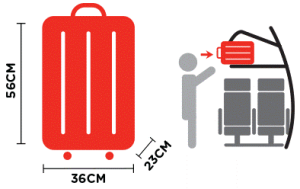
Your Main Cabin Bag – This goes in the overhead compartment and must measure no larger than:
- 56 cm (H) x 36 cm (W) x 23 cm (D)
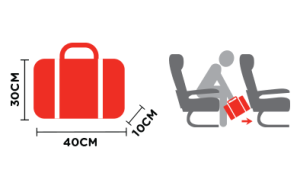
Your Small Bag – This should fit under the seat in front of you and must measure no larger than:
- 40 cm (H) x 30 cm (W) x 10 cm (D)
Important Things to Remember
- Multiple items strapped or tied together? They don’t count as one piece, as each item counts separately toward your allowance
- Traveling with little ones? Infants under 2 years old don’t get a cabin baggage allowance, but children 2 years and above have the same allowance as adults. Foldable strollers and wheelchairs are allowed as cabin baggage if they fit within the size limits
- Shopping at the airport? Those purchases count toward your 7kg limit, unless they’re duty-free items sealed in a Security Tamper-Evident Bag (STEB) with proof of purchase
- Bringing smart baggage? It’s only allowed if the non-removable batteries don’t exceed 0.3g (lithium metal) or 2.7Wh (lithium-ion), and the bag stays within the 7kg weight limit
If your cabin baggage exceeds the weight or size limits, you’ll need to check it in at the counter. If you don’t, it may be checked at the gate and fees could apply.
Need More Space?
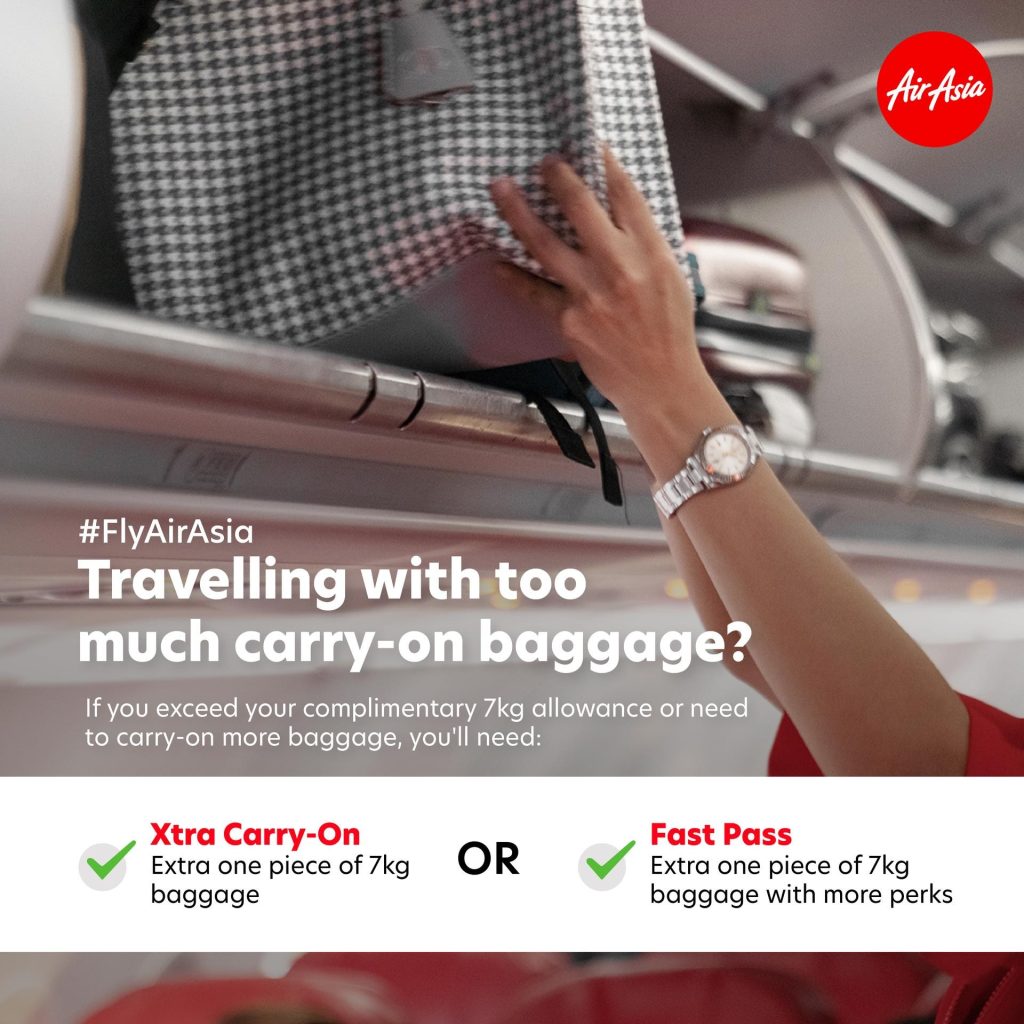
If 7kg isn’t enough, consider purchasing Xtra Carry-On or Fast Pass. Both options give you an additional 7kg allowance (total 14kg across two cabin bags), but availability is limited and allocated on a first-come, first-served basis.
Power Banks: New Rules Starting April 1, 2025
AirAsia is taking safety seriously when it comes to lithium batteries. Starting April 1, 2025, there are strict new regulations for carrying and using power banks onboard.
The Big Change: No Using or Charging Power Banks Onboard
From April 1st onwards, using or charging power banks is strictly prohibited during all phases of your flight. Yes, that means from boarding to disembarkation. This applies to all power banks, regardless of capacity or certification.
How to Pack Your Power Bank Safely
- Keep it with you: Power banks must NOT be stored in the overhead compartment. Keep them on your person or in the seat pocket in front of you.
- Pack them individually: Each power bank should be sealed in a plastic or insulated pouch, or kept in its original retail packaging to prevent short circuits.
- High-capacity power banks: If your power bank is between 100Wh and 160Wh, you’ll need airline approval at the check-in counter. (Pro tip: Guests departing from South Korea will receive clearance stickers from check-in staff.)
- Never in checked luggage: Power banks are strictly forbidden in checked baggage
Other Electronic Devices
All other electronic devices should be switched off before storing them in the overhead compartment.
Safety First
If you notice your power bank (or any device) overheating, swelling, or showing unusual symptoms, alert a crew member immediately. These precautions help keep everyone safe at 30,000 feet.
Quick Checklist Before Your Flight:
✔ Weigh your cabin bags. The combined weight shouldn’t exceed 7kg (or 14kg if you’ve purchased extra allowance)
✔ Measure your bags to ensure they fit the size limits
✔ Pack power banks in protective pouches and keep them accessible
✔ Remember: No charging or using power banks onboard from April 1, 2025
✔ Turn off all electronics before storing them overhead
Questions About Your Booking?
These policies help ensure smoother boarding and safer flights for everyone. If you have questions about your upcoming trip or need assistance with your booking, feel free to reach out to us. Safe travels!