
Introduction
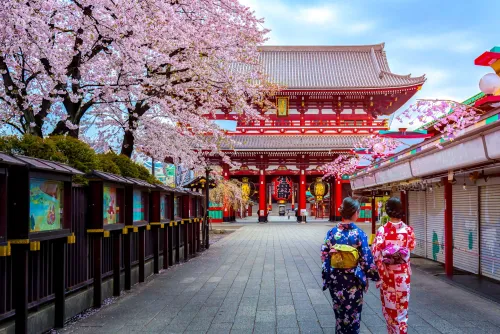
Japan welcomed a record 42.7 million international visitors in 2025, and a very large share of them funnelled into the same few blocks of Shibuya, Shinjuku and Asakusa. If you have ever queued 40 minutes for a bowl of ramen or shuffled through Senso-ji shoulder to shoulder, you already know the feeling. Tokyo is still worth seeing. It just no longer needs to be the whole trip.
The good news is that Japan has 47 prefectures, and most of them remain gloriously uncrowded. This guide covers where to go instead, when to go, and how to structure your itinerary so your days are spent exploring rather than queueing.
If you want to discover the best of Japan beyond the tourist crowds, Holiday GoGoGo can help. Our Japan holiday packages are designed for Malaysian travellers who want more than the standard Shibuya-Kyoto-Osaka loop, with itineraries built around the regions and experiences that actually match the Japan you want to see.
Why Tokyo Feels Fuller Than Ever
Three things collided at roughly the same time:
- A weak yen turned Japan into one of the best value destinations in Asia
- Post-pandemic travel demand rebounded faster than hotels and trains could absorb it
- Social media pushed the same handful of photo spots to the top of everyone’s itinerary
Japan’s own tourism body has noticed. The Japan National Tourism Organization has been actively encouraging travellers to look past the major cities and spend time in lesser known regions. That is not a consolation prize. In most cases the regional experience is simply the better one.
Five Regions Worth Building Your Trip Around
1. Hokkaido
Japan’s northernmost island is the easiest swap for anyone who wants space. Sapporo is a walkable, food-obsessed city with none of Tokyo’s crush. Beyond it you get Otaru’s canal, the volcanic steam of Noboribetsu, Lake Toya, and Niseko’s powder in winter. Summer is quietly the best-kept secret here, with lavender fields in Furano and hiking weather that never gets humid. Most Hokkaido tour packages run 6 to 8 days, which is about right for the driving distances involved.
2. Osaka and the Kansai Countryside
Osaka is busy, but it is a different kind of busy: loud, friendly and food-first rather than commuter-dense. Use it as a base and the real value shows up in day trips to Nara’s deer park, Kobe’s harbour, and the mountain temples of Koyasan. Even Kyoto becomes manageable if you arrive before 8am. Well-planned Osaka tour packages build in these side trips instead of leaving you to work out the train transfers yourself.
3. Tohoku
The six prefectures north of Tokyo are, for now, the biggest gap between how good somewhere is and how many people go there. Sendai has excellent grilled beef tongue and easy access to the pine islands of Matsushima. Yamagata has mountain temples carved into cliffsides. Iwate has a UNESCO-listed temple complex and almost no queues. Cherry blossom arrives here two to three weeks after Tokyo, which means a second chance if you miss the Kanto bloom.
4. Kyushu
The southern island is built for slower travel. Fukuoka has Japan’s best street food stalls, Beppu and Yufuin are hot spring towns you can genuinely relax in, and Kumamoto and Kagoshima give you castles and an active volcano within a short train ride. Winters are mild here, which makes Kyushu a strong pick if snow is not your thing but temples and onsen are.
5. Chubu: Takayama, Shirakawa-go and Kanazawa
If you want the postcard version of old Japan without the crowd, this corridor delivers. Takayama has a preserved merchant district and a superb morning market. Shirakawa-go’s thatched farmhouses look staged but are not. Kanazawa has a garden widely considered one of Japan’s three finest, plus a gold leaf tradition you can try yourself. It slots neatly between Tokyo and Osaka on a longer route.
How to Time Your Trip to Dodge the Crowds
Where you go matters, but when you go matters just as much. A few rules that consistently work:
- Avoid Golden Week (late April to early May) and Obon (mid-August). Domestic travel peaks and prices follow.
- Consider late November for autumn colour in Tohoku and Kyushu, after the Kyoto rush has thinned.
- Book February for Hokkaido if you want snow festivals without the New Year premium.
- Travel midweek. Arriving at a regional destination on a Tuesday rather than a Saturday changes the experience completely.
Good japan holiday packages already account for this. If a quoted itinerary drops you into Kyoto on a public holiday weekend, ask whether it can be shifted.
What to Look for in Japan Holiday Packages
Not all itineraries are built the same. When comparing japan holiday packages, check for:
- Realistic pacing. Three cities in five days sounds efficient and feels exhausting.
- Regional coverage. An itinerary that never leaves the Tokyo to Osaka corridor is missing most of the country.
- Included transport. Shinkansen and regional rail passes add up quickly when booked separately.
- Flexibility to customise. The best japan holiday packages let you swap a shopping afternoon for a hot spring stop.
- Local support. A contactable team in your own time zone matters more than you expect when a train is cancelled.
HolidayGoGoGo’s Japan holiday packages cover Tokyo, Osaka, Hokkaido and beyond, and can be adjusted around your dates and travel pace.
Frequently Asked Questions
1. Is it still worth visiting Tokyo at all?
Yes, but treat it as two or three days rather than a week. Use it as an arrival and departure point, then spend the bulk of your trip in a quieter region. Most japan holiday packages are structured this way for exactly that reason.
2. Which region is best for a first-time visitor avoiding crowds?
Hokkaido or Kyushu. Both have straightforward domestic flight connections, strong food scenes, and enough variety that you will not feel like you compromised by skipping the classics.
3. Do I need to speak Japanese in regional areas?
It helps but is not essential. English signage is common at major stations and attractions. A guided package removes the issue entirely, since your guide handles check-ins, transfers and restaurant bookings.
4. How many days should I plan for Japan?
Seven days is a workable minimum for one or two regions. Ten to twelve days lets you combine a city base with a rural stretch without rushing. Anything shorter usually means more time on trains than on the ground.
5. Are regional destinations more expensive?
Generally no. Accommodation outside Tokyo and Kyoto tends to cost less, and japan holiday packages that include domestic transport often work out cheaper per day than a self-planned city trip.
Ready to See a Different Side of Japan?
Tokyo’s crowds are not a reason to skip Japan. They are a reason to plan better. The country’s most memorable experiences, the mountain temples, the empty onsen towns, the food streets locals actually eat on, are mostly a train ride away from the places everyone photographs.
If you would rather not untangle rail passes and regional timetables yourself, Holiday GoGoGo is here to help. Our licensed Malaysian travel team will shape an itinerary around the Japan you actually want to see. Contact us today to start planning your Japan adventure with Holiday GoGoGo.